Small businesses face growing cybersecurity threats each year. Hackers target them because they often have weaker protection than large corporations. A single data breach can destroy customer trust and cause major financial losses.
Many small business owners assume hackers only target big companies. That is false. Studies show that nearly half of all cyberattacks focus on small firms. Criminals know small organizations store valuable information and often lack strong defenses.
The first step is understanding the risk. Every device, app, and employee can be an entry point for attackers. Cybersecurity must become a daily habit, not a one-time purchase.
Building a Strong Foundation
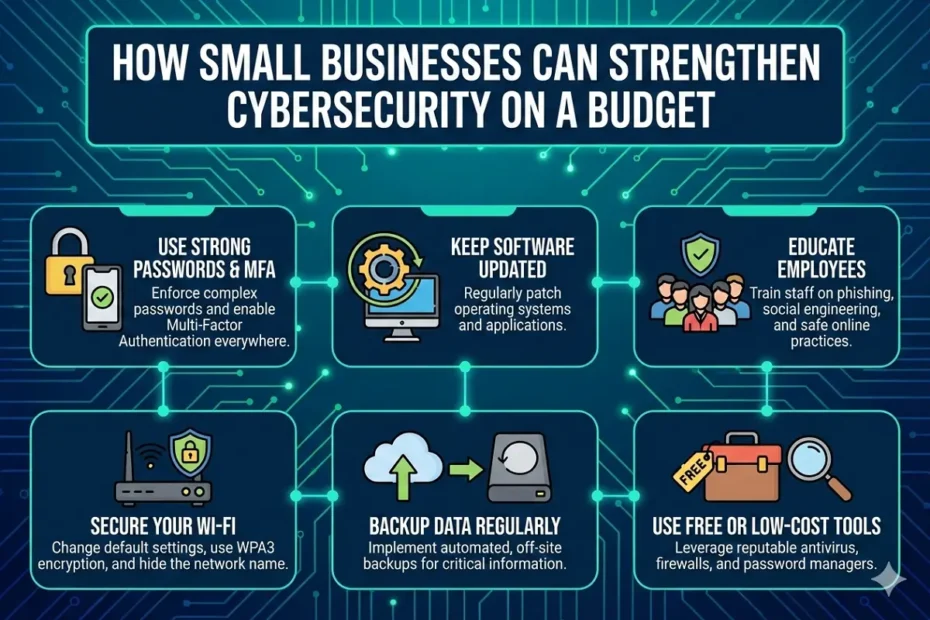
Start with basic but powerful measures. These are inexpensive and effective.
- Use strong, unique passwords for every account.
- Enable multi-factor authentication.
- Keep software and operating systems updated.
- Back up all important data regularly.
- Train employees to recognize phishing emails.
These actions reduce the most common risks. Many attacks happen because of simple mistakes. A cautious employee can stop a major breach before it starts.
Free tools can also help. Services like Google’s Security Checkup and Microsoft Defender provide strong baseline protection. Regularly scan your network for vulnerabilities. If you handle customer data, consider encrypting files to protect them from leaks.
Implementing IAM Cybersecurity for Better Control
Identity and Access Management, or IAM cybersecurity, helps control who accesses your systems and data. This is essential for small businesses that share tools and files across teams.
IAM systems verify user identities and manage their permissions. For example, an employee in sales should not have access to accounting files. By limiting access, you reduce the risk of insider threats and data leaks.
Modern IAM tools include single sign-on options, which allow users to log in once and access approved resources securely. They also support role-based access controls that ensure employees only see what they need for their work.
Cloud-based IAM solutions are affordable and scale with your business. They integrate easily with tools like Google Workspace and Microsoft 365. This makes them a smart choice for small teams looking to tighten security without hiring full-time IT staff.
Protecting Customer Data
Customers trust you with their information. Protecting it must be a priority. When you collect or store customer data, you accept responsibility for keeping it safe.
Encrypt all sensitive information, including payment details and personal identifiers. Limit data collection to what you need. Do not store customer data longer than necessary.
Consider using secure payment processors instead of managing transactions directly. This reduces your exposure and shifts part of the security responsibility to certified providers.
If your business handles health or financial information, follow all relevant regulations. Compliance not only protects your company but also signals professionalism and care to customers.
Creating a Culture of Awareness
Technology alone is not enough. Human error causes most security incidents. Create a culture where everyone takes responsibility for security.
Hold short training sessions each month. Teach staff how to recognize suspicious links, fake invoices, and malware traps. Encourage them to report anything unusual immediately.
Reward employees who follow best practices. This helps make cybersecurity part of your company’s daily routine. A strong culture turns every worker into a defender.
Planning for the Worst
Even with strong protection, no system is perfect. Have a plan in place for when something goes wrong.
Identify who will respond to a breach and what steps they will take. Keep emergency contact information for your IT provider or security consultant. Test your plan regularly to ensure it works in real conditions.
Backups are your last line of defense. Store them in a separate location and test them often. If ransomware strikes, you can recover your data quickly and reduce downtime.
The Bottom Line
Cybersecurity is not optional. It is a core part of running a business. Small businesses do not need massive budgets to stay safe. They need awareness, planning, and consistent action.
By applying basic protections, using IAM cybersecurity tools, training employees, and planning for incidents, you can protect your company from most threats.
Strong security is not a luxury. It is a business necessity. When you protect your data, you protect your reputation, your revenue, and your future.