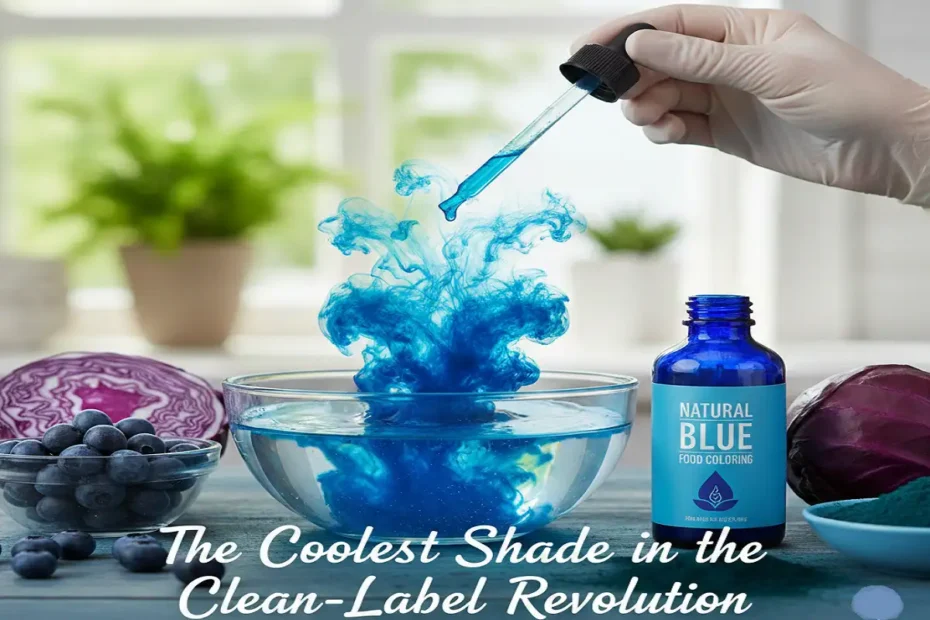
Blue is one of the rarest naturally occurring colors in food, which is exactly why it fascinates consumers. From blue candies and beverages to frostings, ice creams, and novelty snacks, this vibrant shade sparks curiosity, excitement, and visual appeal. But while synthetic blues like Brilliant Blue (Blue 1) once dominated the industry, today’s health-conscious market is shifting rapidly toward natural blue food coloring. As clean-label, plant-based, and additive-free claims gain momentum, manufacturers are searching for safe, nature-derived blue pigments that deliver both performance and consumer trust. And thanks to new ingredient innovations, natural blue is finally becoming a mainstream reality.
Why Natural Blue Food Coloring Matters
Unlike red, yellow, and green, blue doesn’t commonly appear in fruits and vegetables. That scarcity makes the color especially powerful—and challenging—for formulators. The push toward natural blue is driven by:
1. Growing rejection of artificial dyes.
2. Clean-label and “no artificial additives” trends.
3. Rising demand for plant-based, vegan ingredients.
4. More awareness of ingredient safety.
5. Premium product positioning.
For brands, natural blue doesn’t just add color—it adds credibility.
Top Sources of Natural Blue Pigments
Because blue is uncommon in nature, only a few sources provide true, stable blue tones. The most widely used natural blue food colorings include:
Spirulina Extract
The star of the natural blue world, spirulina (a blue-green algae) contains phycocyanin, a pigment that produces a brilliant, sky-blue shade.
Applications:
- Gummies and candies
- Frostings and bakery fillings
- Ice creams and frozen desserts
- Smoothies and beverages
- Dairy and plant-based dairy
Spirulina is vegan, allergen-free, and widely accepted in global markets. It also carries a natural “superfood” halo, adding marketing appeal.
Anthocyanins (Blueberry/Purple Sweet Potato)
Anthocyanins can shift between purple, blue, and red depending on pH. While they often lean purple, carefully controlled formulations can produce blue tones.
Common uses:
- Beverages
- Jellies and jams
- Fruit snacks
- Confectionery
These pigments are also natural antioxidants, enhancing wellness positioning.
Gardenia Blue (Region-Specific)
Used in parts of Asia, gardenia extract produces blue hues through the interaction of crocins and amino acids. It’s not approved in all regions, but where permitted, it offers rich, stable blue shades.
How Natural Blue Is Used in Food & Beverages
Natural blue can instantly elevate visual and flavor cues, making products look fun, refreshing, fruity, or premium. It’s especially popular in:
- Icing, fondant, and bakery décor
- Gummies, hard candies, and marshmallows
- Ice pops, sorbets, and frozen desserts
- Sports drinks, mocktails, and smoothies
- Breakfast cereals and extruded snacks
- Plant-based beverages and novelty foods
Blue also plays a key role in color blending—it helps create natural purple, teal, green, and lavender tones when mixed with other pigments.
Stability & Processing Challenges
Natural blue pigments, especially spirulina-based phycocyanin, can be sensitive to:
- Heat
- Light exposure
- Low pH (acidic environments)
- Oxidation
For example:
- Spirulina performs best in neutral to slightly alkaline systems.
- Anthocyanin blues shift color under acidic pH.
- High-heat processing can fade pigments.
To address this, manufacturers are developing:
- Spray-dried blue powders
- Encapsulated pigments
- Heat-stable spirulina solutions
- Beverage-ready emulsions
These innovations are expanding the usability of natural blue across more food categories.
A Clean-Label Marketing Advantage
Natural blue isn’t just a color—it’s a story. Labels that say “spirulina extract” or “fruit and vegetable juice color” instantly connect with consumer expectations around:
- Transparency
- Natural sourcing
- Plant-based claims
- Better-for-you ingredients
In a competitive market, even a fun visual can help strengthen brand trust and product differentiation.
What’s Next for Natural Blue Coloring?
The global demand for natural blue is growing fast. Future developments are likely to focus on:
- Improved heat and pH stability
- Organic-certified blue pigments
- New botanical blue sources
- Expanded use in plant-based meats and dairy
- Customized blue shades and blends
As technology advances, natural blue will move from novelty to necessity in many product categories.
Conclusion
Natural food coloring represents one of the most exciting breakthroughs in clean-label innovation. Powered by sources like spirulina and anthocyanins, it allows brands to achieve visually stunning results—without synthetic dyes.
With rising consumer demand for natural, transparent, and plant-based ingredients, the future of blue is bright, bold, and beautifully natural.